Off-Grid Tiny House Living: Power, Water & Waste
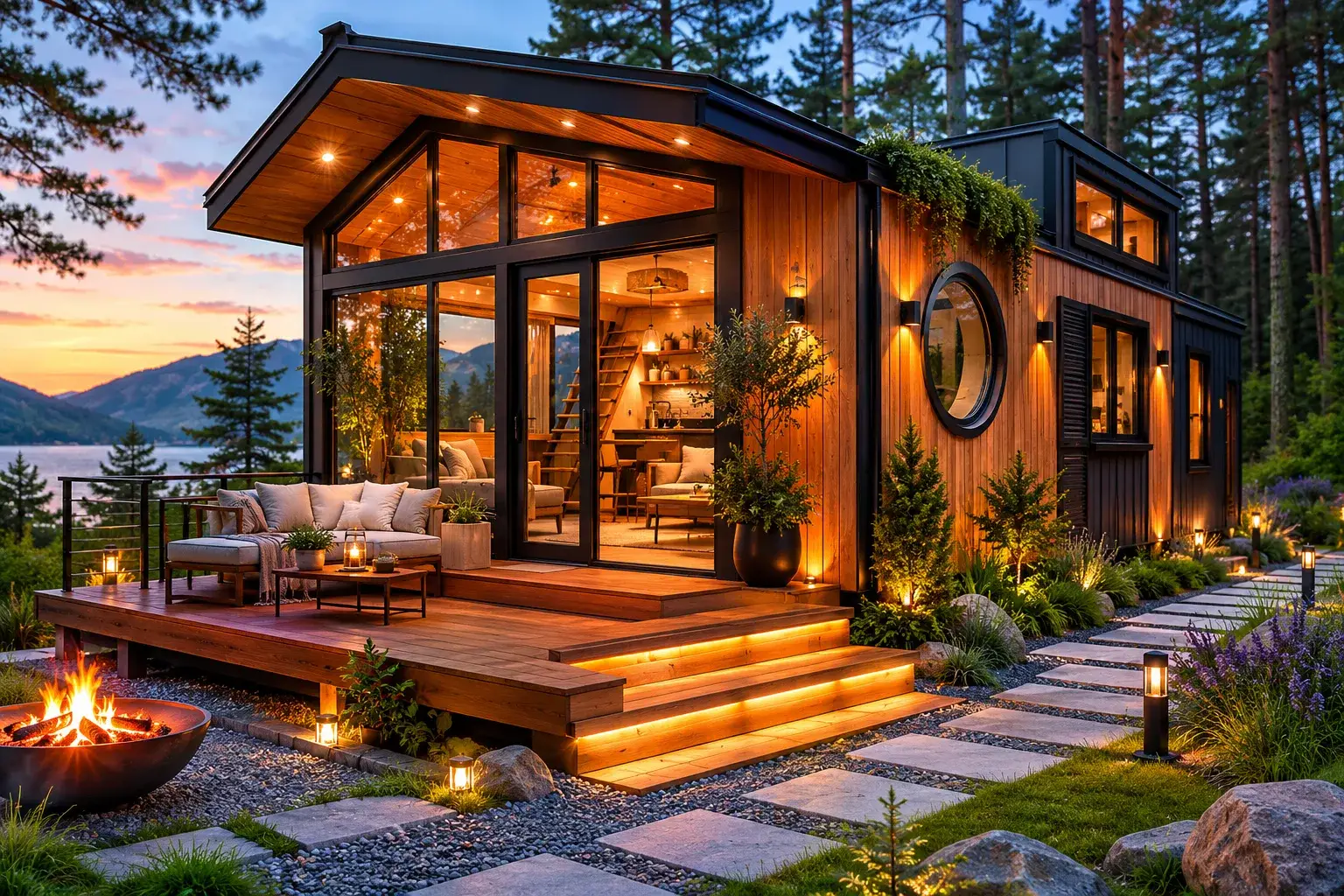
Living off-grid is one of the most appealing parts of the tiny house dream — energy independence, lower running costs, and the freedom to build somewhere beautiful and remote. It's absolutely achievable, but it's a system, not a single product. Here's how the three pillars — power, water and waste — actually work in a real off-grid tiny house.
Power
Most off-grid homes run on solar. A roof or ground array charges a battery bank, and an inverter converts that stored energy to standard household power. The size of the system depends on your loads: lighting, a fridge and electronics are modest; electric heating, air conditioning or an electric range demand much more. The single best thing you can do is reduce demand first — excellent insulation, efficient appliances and LED lighting make a smaller, cheaper system viable. Many off-grid owners keep a backup generator for long stretches of cloudy weather.
Water
Off-grid water comes from one of three sources: a well, delivered or hauled water stored in a tank, or rainwater harvesting from the roof. Stored water needs filtration and, for drinking, purification. Plan tank capacity around your real usage and how often you can refill. A pressure pump gives you normal household water pressure from a tank. Conservation fixtures — low-flow taps and showers — stretch every gallon and shrink the storage you need.
Waste
Waste splits in two. For the toilet, a composting toilet is the classic off-grid choice: it uses no water and turns waste into compost, eliminating the need for a sewer or septic connection. Greywater — from sinks and the shower — is handled separately, often through a filtered drain field or a tank, depending on what local rules allow. This is the area where regulations bite hardest, so check before you build.
Heating and staying comfortable
Off-grid doesn't mean cold. Many owners pair a small, efficient heat source — a mini-split heat pump, a propane heater, or a wood stove — with serious insulation so the home stays comfortable year-round without a huge energy draw. The same envelope that keeps a four-season home warm in winter keeps an off-grid one efficient. This is why we engineer every home for real winters regardless of how it's powered.
Important
Going off-grid solves comfort and location problems, not legal ones. Many jurisdictions still require connection to public water and sewer, or regulate composting toilets and greywater. Confirm what's allowed on your specific parcel — see our guide on where you can put a tiny house.
Is off-grid right for you?
Off-grid living rewards people who want independence and a remote site, and who are comfortable managing systems — checking batteries, refilling water, maintaining a composting toilet. If that sounds like freedom rather than a chore, it's a wonderful way to live. If it sounds like work, a serviced site with standard hookups may suit you better. Either way, start with a well-insulated, efficient home, then size the systems to match. To plan a self-sufficient build, reach out and we'll help you spec it.
Based in the German-speaking market? We have a separate guide on this topic written specifically for Germany, Austria and Switzerland (not a translation): Wie autark kann ein Tiny House sein?