
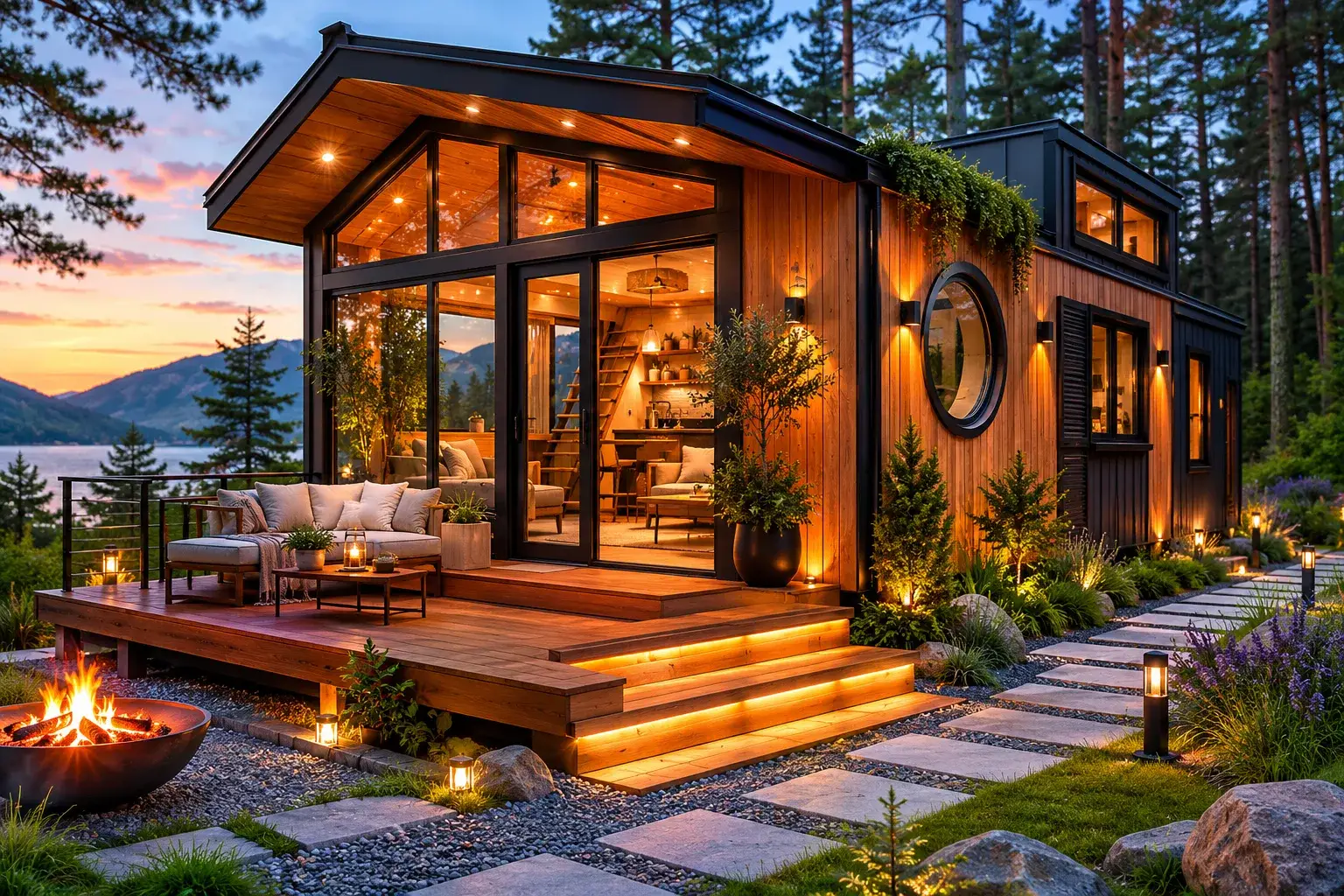
An off-grid tiny house lets you live without relying on the public power, water or sewer grid. With the right combination of solar panels, battery storage, a water system and a composting toilet, you can place your home where utility hookups are impractical — and keep your running costs close to zero.
Off-grid only works if the systems are sized correctly and the home itself is efficient. We design every off-grid build around your climate and how you actually use power and water, so the home performs through real winters, not just sunny summer days. Here is how the pieces fit together.
Power: solar panels and battery storage
The heart of an off-grid home is solar generation paired with battery storage. Panels charge the batteries during the day; the batteries run the home overnight and through cloudy stretches. The key is sizing both to your real usage and your location's winter sunlight, so you never run short when you need power most.
We size the array and battery bank around your appliances, heating and the darkest months, and can include a backup generator for long overcast periods. Efficient LED lighting and low-draw appliances keep demand sensible.
- Solar array sized for winter sunlight, not just summer
- Battery bank for overnight and cloudy days
- Optional generator backup for long gray spells
- Efficient LED lighting and low-draw appliances
- Pre-wired for future expansion
Water and waste without the grid
Off-grid water comes from a storage tank, a well, or collected rainwater, pushed through a pump and filtration system to give you normal pressure at the tap. Greywater from sinks and the shower can be managed responsibly on site.
For waste, a composting toilet removes the need for a sewer or septic connection entirely. It uses little to no water, is odor-free when ventilated correctly, and turns waste into compost — which is why it is the standard choice for serious off-grid homes.
- Fresh water from tank, well or rainwater capture
- Pump and filtration for normal tap pressure
- Composting toilet — no sewer or septic needed
- Responsible greywater management on site
Why four-season insulation is the foundation
Off-grid living is only comfortable if the home holds its heat. A poorly insulated cabin burns through battery power and firewood trying to stay warm; a well-insulated one stays comfortable on a fraction of the energy. Efficiency is what makes the whole system affordable.
Every off-grid home we build starts with four-season insulation and tight construction, so your solar, batteries and heating can be sized sensibly rather than oversized to fight heat loss.